20 Definitive Ways For Rugeley PAT Testing And Fire Extinguisher Servicing
Blog Article
Top 10 Tips On The Testing Equipment For PAT in Rugeley
In the UK The choice, usage and maintenance of testing equipment forms the core of any efficient and compatible Portable Appliance Testing programme. Quality, calibration, and the proper use of test instruments are all crucial to the accuracy and reliability of tests for safety. The test equipment is required to perform the exact electrical tests specified by the IET Code of Practice for In-Service Testing and Inspection of Electrical Equipment, which serves as the industry standard for best practice. The tools used for confirming the safety of electrical devices are varied, ranging from sophisticated portable appliances testers to basic Voltage indicators. Understanding the capabilities and limitations of the equipment, as well as the legal requirements is vital for anyone wanting to make sure their testing program is both technically sound and legally valid.
1. Portable Appliance Tester Tester in Rugeley
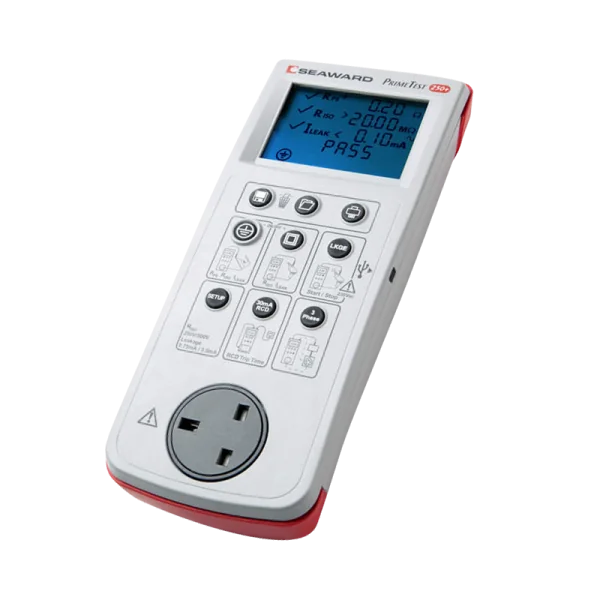
The most basic device is an automated gadget that runs a variety of safety tests. Modern testers are available in a range of designs, from basic ones that carry out earth continuity as well as insulation resistance and test for lead polarity, to more advanced units with additional tests, like run/load currents, earth leakage and touch currents. One of the key features is the ability to perform "soft tests" or leakage tests on delicate devices that contain electronic components (e.g. printers, computers) that could be damaged by the high voltage applied in a typical insulation test. The tester you choose must be based on the requirements of the equipment being test.
2. UKAS Laboratory Calibration is required each year in Rugeley
This is a mandatory requirement to ensure compliance and due diligence. The United Kingdom Accreditation Service requires that the PAT test is calibrated regularly, usually annually through an accredited laboratory. This calibration verifies the accuracy of the device and also its conformity to national standards. The provider must possess a valid calibration certificate every tester they employ. A test that is performed with an out of calibration or uncalibrated instrument invalidates all test results and leaves no recourse in the event in the event of an accident.
3. User Checks & Functionality Verifications (Daily/Pre Usage)
Before beginning testing technicians must conduct a daily function check. The check may be known as an "user's test" or a "verification". It usually involves testing an established "proof load" or set of test leads. If the tester produces a result that is not the expected result to be expected for this "known-good" product, it could be an issue in the test. The tester shouldn't use until it has been given service and calibration. This simple test is essential to ensuring that equipment functions properly on the first day of usage.
4. The vital role of visual Inspection Equipment in Rugeley
The tools needed for a thorough inspection, although often neglected by testers, are just as crucial. Included are screwdrivers that can be used to remove plugs and other appliances as well as the appropriate fuse rating for replacements and a label printer or labels pre-printed to identify assets, and a torch to check dark areas. This is essential in identifying any issues.
5. Specialised Test Leads and Adapters in Rugeley
A competent technician will possess a comprehensive set of test leads and adaptors to interface with every type of appliance inlet. There are adaptors to connect detachable leads and test them, and adaptors that let you test the plug end. Incorrectly connecting could result in a wrong test being run or even skipping the test altogether.
6. Earth Bond Test Lead and its significance for Class I Equipment
Tests for Earth Bond are essential for testing the earth bond for Class I appliances which need an earth circuit to ensure safety. In order to ensure that a strong connection to the earth circuit is established, it's important to select a test lead with a high capacity current (5-25A). An inferior lead or one not suited to the test current can give a false pass reading which could pose a deadly risk to your safety. Technicians must be aware of choosing the correct lead for the test.
7. Tests for Resistance to Insulation and Voltage Parameters
The insulation resistance test measures the insulation's integrity with a high DC (usually 500V) voltage that is applied between the live and earth conductors. Technicians must know when to use this test and when to avoid it (e.g. when working on devices with surge protectors or sensitive electronics when a different leakage test is safer). The equipment should be able to deliver the required test voltage as per the IET Code.
8. Presets, Pass/Fail Criteria, and Instruments in Rugeley
The most reliable PAT tests are built on pass/fail criteria based on the guidelines laid out in the Code of Practice. (e.g. insulation resistance >1MO, earth-bond resistance 0.1O+R). Transparency implies that the technician should be aware of these limits and not make any changes in order to obtain a pass. The service provider must confirm that the equipment it uses is set according to industry-standard thresholds to ensure consistent results.
9. Data Management and Reporting Capabilities in Rugeley
Modern PAT testers are data-loggers. They can store hundreds of thousands of test data which can be downloaded into software that can create certificate, asset registers and failure reports. Transparent providers will make use of this feature to provide detailed and clear proof. Paper-based records made manually are prone to errors, destruction and falsification. They don't reflect best industry practice.
10. Secondary Verification Equipment: Voltage Indicators, GS38 in Rugeley
Although the PAT tester is the primary tool for a competent technician, they will also carry a voltage gauge (or the voltstick) to ensure that all electrical connections are inactive. This is particularly important when replacing an outlet or investigating a problem. The second device must be in compliance with HSE Guideline Note GS38 which specifies the specifications for the design (e.g. fingers guards and probes that are insulated). This adds an important layer of security to the operator performing the testing. Have a look at the top Rugeley emergency light testing for more advice.
Top 10 Tips For Ensuring Fire Extinguisher Services Are In Line With The Laws in Rugeley
The system of regulation in the United Kingdom for the maintenance of fire extinguishers has been created to provide a comprehensive framework that ensures equipment reliability and public safety as well as technical standards through clearly-defined legal requirements. Fire extinguisher regulations are more specific than some other safety rules, which offer broad guidelines. They are supported by specific technical standards and third-party certificate programmes that provide a well-defined path to compliance. The "Responsible person" is the sole person accountable for the care and maintenance of the building, but there are benchmarks and guidelines to show due diligence. Understanding this framework will help you maintain legal compliance and also make sure that your fire safety equipment is in good working order in an emergency situation.
1. The Restructuring Reform (Fire Safety) Order 2005 (FSO) in Rugeley
This law forms the foundation of England and Wales law regarding fire safety. Similar regulations are also in force in Scotland (Fire Scotland Act, 2006) and Northern Ireland. Article 17 states that all firefighting equipment is required to be "subjected to a proper maintenance system and maintained in a good condition, efficient working order, and in good repair." This responsibility is placed on the "Responsible person" (typically an employer, owner or occupier) who is legally responsible for ensuring all fire safety equipment including portable extinguishers are kept in good condition in good working order, efficient and well-maintained.
2. British Standard BS 5306-3 (2017)
This standard provides the technical framework to ensure compliance with the FSO, detailing the specific requirements to commission and maintain portable fire extinguishers. It defines the different types of services: basic service that includes an annual visual inspection, a few inspections, and extended service that includes a discharge test and an internal examination once every five years, for water, powder and foam extinguishers, and overhauls for CO2 and other gas extinguishers. The law states that maintenance systems be in compliance with the BS 536-3.
3. Third-Party Certification Schemes (BAFE SP101). in Rugeley
It is not legally required, however having a BAFE SP101 (British Standards for Fire Equipment – British Approvals) certified provider provides the most convincing evidence of proper care. This UKAS accreditation scheme demonstrates independently that a business is in compliance with the highest standards of competence for technicians quality, work-quality, equipment, and business processes. BAFE Certification is accepted as a strong proof to insurance companies, fire authorities and courts to prove that an organization has met the FSO’s maintenance requirements.
4. Fire Risk Assessment – What's the purpose? in Rugeley
The Fire Risk Assessment (FRA) is the dynamic document that drives all fire safety decisions, including those related to extinguisher servicing. It should determine the proper firefighting apparatus in terms of size, Rugeley, and model, then define the type of maintenance that is needed. The FRA is required to be re-examined regularly and especially when circumstances change. Any changes must be included in the servicing schedule. The reviews from service providers can be a great source of information for the reviews.
5. Documentation Requirements and Evidence in Rugeley
For compliance reasons, it's important to have comprehensive documentation. After each service, the provider must provide a thorough report that includes details of the company, engineer information, service date, list of equipment that was serviced, the type of service executed, and any suggestions or issues identified. Inspection of these reports by the enforcement agencies and insurance companies (Fire and Rescue Services as well as Insurance Providers) is mandatory. The absence of the proper documentation could lead to an enforcement action, even if the service was performed.
6. Sanctions and Enforcement Mechanisms in Rugeley
Local Fire and Rescue Authorities perform compliance audits, and also have enforcement power. If they find that they are not in compliance they could issue Alteration Notices (requiring specific modifications to fire security measures) or Enforcement Notes (mandating improvements within a specific timeframe) and in more serious instances, Prohibition Notifications (closing premises or limiting access immediately). Courts can impose unlimited fines and up to two years' jail time for serious violations, specifically those that endanger life or property.
7. Insurance Insights in Rugeley
Most commercial insurance policies need compliance with the fire safety legislation as a requirement of the policy. Inadequate servicing records or using suppliers that aren't compliant could void insurance coverage following a fire incident. Insurance assessors often require servicing records when they are processing. They may also demand that insurers follow specific standardization standards like BAFESP101 to ensure coverage for large commercial or high-risk buildings.
8. Technical Competencies in Rugeley
The FSO stipulates that maintenance must be carried out by "a competent person." While not legally defined, competence generally includes: formal training on BS 5306-3, manufacturer-specific equipment training, practical experience, and understanding of relevant regulations. Through regular audits and assessments Third-party certification schemes such as BAFE SP101 verify technician competence.
9. Environmental Compliance in Rugeley
The proper disposal of extinguishers that have been decommissioned and waste materials is covered in the realm of environmental law, particularly the Environmental Protection Act 1990. Service providers must be registered as waste carriers. They must also provide waste Transfer Notes. Responsible persons should make sure that their provider follows the law when it comes to disposing of their waste.
10. How often and to what extent are services required? in Rugeley
The frequency of service required by BS 536-3 must be adhered to: annual basic service for all extinguishers, extended maintenance every five years for the foam, powder and water types; and overhauls every ten years for CO2 units. Additionally, the responsible person must ensure that the monthly inspections are performed by personnel (often). These inspections are required to identify obvious problems, such as obstruction, damage or loss of pressure. By combining professional services with user inspections, this system is comprehensive. See the recommended Rugeley fire protection for more recommendations.